I attended the Interdisciplinary Conference on Psychedelic Research (ICPR) in Haarlem, Netherlands, one of the largest gatherings of researchers, clinicians, therapists, and educators focused on psychedelic science.
Many European countries have been studying psychedelic therapies, research models, and integration practices for years, often with fewer barriers than exist in the United States. As interest in compounds such as psilocybin, DMT, and ibogaine continues to accelerate, I believe these conversations will increasingly become part of mainstream mental health care in the U.S.
I wanted to learn from the researchers and clinicians who have been doing this work the longest and bring that knowledge back to the patients I serve. The conference covered a wide range of topics, from neuroscience and clinical trials to ethics, policy, and therapeutic approaches. While the presentations varied, I kept returning to one thought:
More people are having psychedelic experiences than ever before. Some are participating in legal retreats abroad. Some are using psychedelics in clinical research settings. Others are exploring these substances independently for healing, personal growth, spiritual exploration, or curiosity. Regardless of how these experiences occur, many people are left with the same question afterward:
"What do I do with what happened?"
A psychedelic experience can bring up powerful emotions, memories, insights, questions, and perspectives. For some people, the experience feels deeply meaningful and life changing. For others, it can be confusing, overwhelming, or difficult to integrate into everyday life. Sometimes it is both.
One theme that came up repeatedly throughout the conference was that the psychedelic experience itself is only part of the process. What happens afterward matters as much as the experience itself.
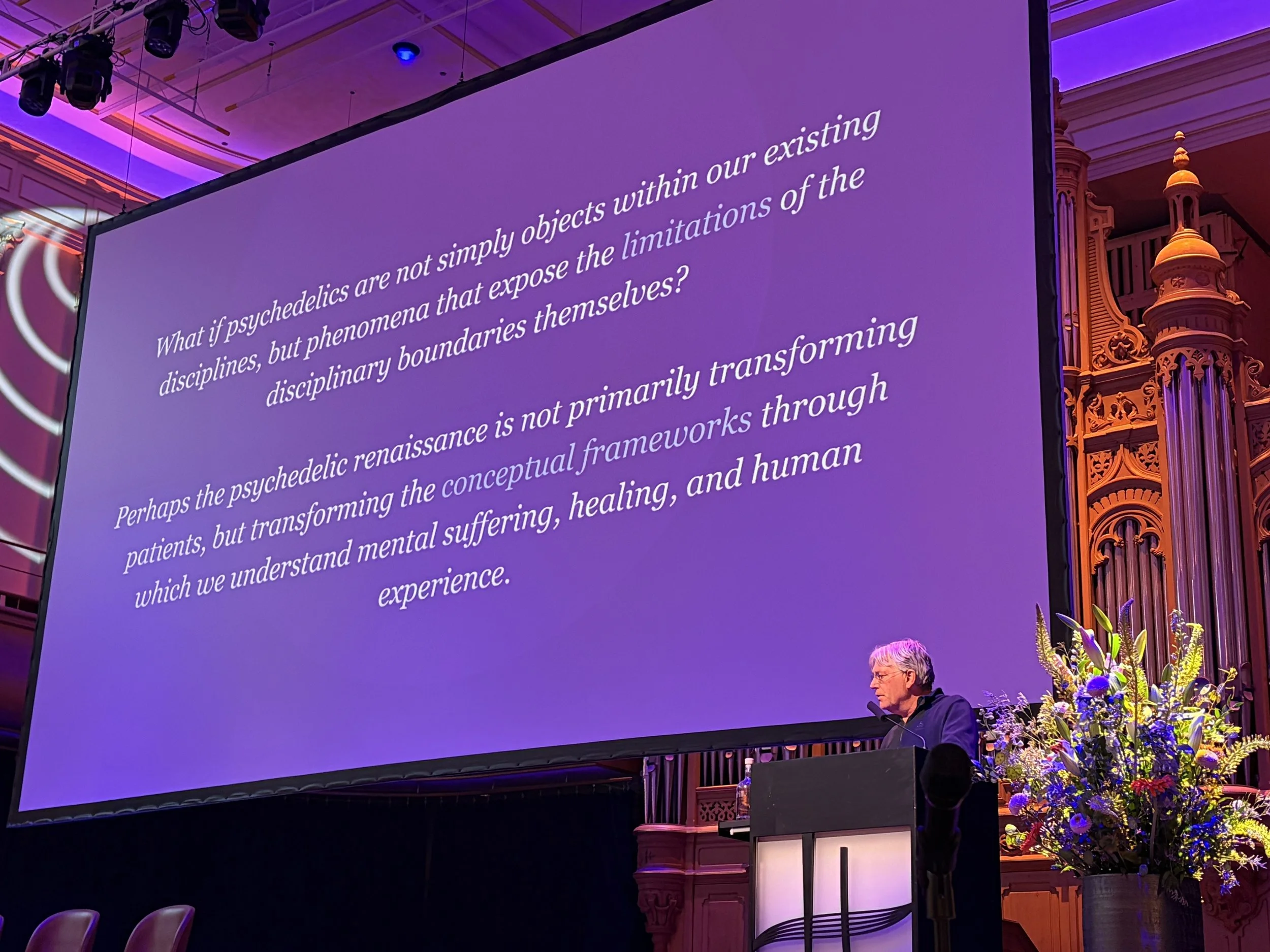
Damiaan Denys, MD, PhD, presenting at ICPR 2026 in Haarlem, Netherlands.
One presentation that particularly stayed with me was a keynote by psychiatrist, psychotherapist, and philosopher Damiaan Denys of Amsterdam UMC and the University of Amsterdam. Rather than focusing on psychedelics as medications, he explored how they challenge some of our assumptions about psychological suffering and healing.
A central theme of his talk was that symptoms are not always mere problems to eliminate. They can also carry personal meaning, reflect unresolved conflicts, point to unmet needs, or emerge during periods of growth and transition. From this perspective, healing is not always a return to a previous version of ourselves. Sometimes it involves developing a different relationship with ourselves, our experiences, and our lives.
As I listened, I found myself thinking about the role of integration. Many people return from these states of consciousness with questions rather than answers. They may find themselves reexamining relationships, values, identity, grief, purpose, or long-standing patterns that no longer seem to fit. The experience itself may last only hours, but the process of understanding and incorporating what emerged can continue for weeks, months, or even years.
That process of making meaning is often where integration begins.
An insight during a psychedelic experience does not automatically create lasting change. Understanding it, reflecting on it, and determining what it means in the context of your life is often where the real work begins.
Increasingly, people are seeking support after psychedelic journeys, yet many do not know where to turn.
Some worry that their therapist or psychiatric provider will judge them for discussing psychedelic use. Others have attempted to bring up these experiences and felt dismissed, misunderstood, or simply met with a lack of familiarity. Many end up trying to process profound experiences entirely on their own.
Attending ICPR reinforced something I have been noticing in my own practice: there is a growing need for thoughtful, informed, and nonjudgmental support for people who want to make sense of these experiences.
For that reason, I am now offering psychedelic integration sessions, either as a standalone service or alongside ongoing medication management.
Psychedelic integration is not psychedelic-assisted therapy, and I do not provide or facilitate psychedelic substances. Instead, these sessions focus on helping individuals explore and understand what they already have been through.
Together, we can examine questions such as:
• What felt meaningful about the experience?
• What emotions, memories, or themes emerged?
• How has the experience affected relationships, values, or life direction?
• Which insights feel important to carry forward, and which may require further reflection?
• How can these experiences be understood within the broader context of mental health and personal growth?
Not every psychedelic experience is profound. Not every experience is positive. Some are inspiring. Some are unsettling. Many are both.
Whatever the experience was, it deserves space to be explored thoughtfully.
My time at ICPR left me encouraged by the growing quality and sophistication of psychedelic research. It also reinforced something simple and human: people are searching for meaning, healing, and understanding. Sometimes those searches lead to experiences that are difficult to explain to friends, family members, or even healthcare providers.
For those looking for a place to unpack those experiences, I am now offering that space.
If you are interested in psychedelic integration sessions, either as a standalone service or alongside ongoing medication management, I invite you to reach out.
Virtual appointments are available in Pennsylvania, New Jersey, Florida and Oregon.
